.png)
Past Hurts: They aren't just in the past
Updated: Jul 29, 2025
We all have past hurts, whether big or small. Ignored, they stay in our bucket, filling the bucket before the day begins. Those who choose to ignore their past hurts stay in denial of the giant boulders in their bucket.

When someone says or does something that closely resembles a past hurt, that boulder is directly hit, triggering a strong emotional reaction.
If the past hurt is unresolved or unhealed, the reaction is much bigger than necessary, and the emotion of “hurt” morphs into expressions of anger, anxiety, depression or some combination of these.

Our reactions typically don’t change, regardless of which past hurt is triggered. So, a person who responds with anxiety to the triggering of one past hurt often responds with anxiety to the triggering of a different past hurt.


Not only are our reactions unique to us, but the things that trigger us are unique to us as well. Our past hurts are not the same. So, we have smaller reactions to rude comments if they are not connected to our past hurts. The person without such past hurts might be mildly bothered, but will be able to move on quickly and without disrupting their nervous system.

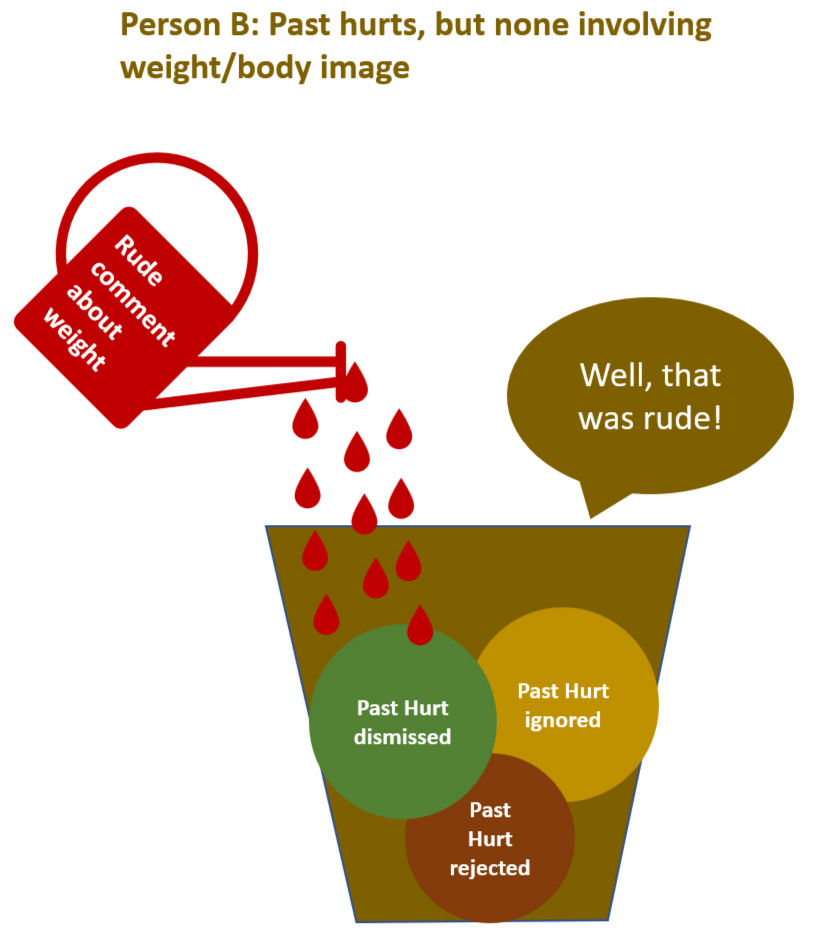
Each time a past hurt is triggered, the original emotions that occured years ago occur all over again, as if the person is back at the original place of offense. Oftentimes, we are unaware of this dynamic. We just react over and over with the same emotions. Without intervention, anxiety leads to more anxiety, anger can tear down relationships, and depression causes a person to shut down. Past hurts aren't just in the past, they are revived and relived with each triggering event.
The good news is, they can be healed in the future.
This is where self-awareness is needed. We can start by looking at what specific, deeper emotions are underneath the emotional reactions. These are typically referred to as "primary emotions" or "intuitive emotions."

Anger usually comes from hurt, disappointment, fear or shame. Anxiety can stem from feeling shame, guilt, dismissed, ignored or unappreciated. Depression can stem from any of these. There is much more to learn about this process and we will keep walking the journey in future posts. For now, you can do an internet search for an extensive "emotions list." Start the journey of self-awareness by looking for deeper emotions attached to your more obvious emotional reactions.
Comments