.png)
Emotion Bucket Boulders
Updated: Jul 29, 2025
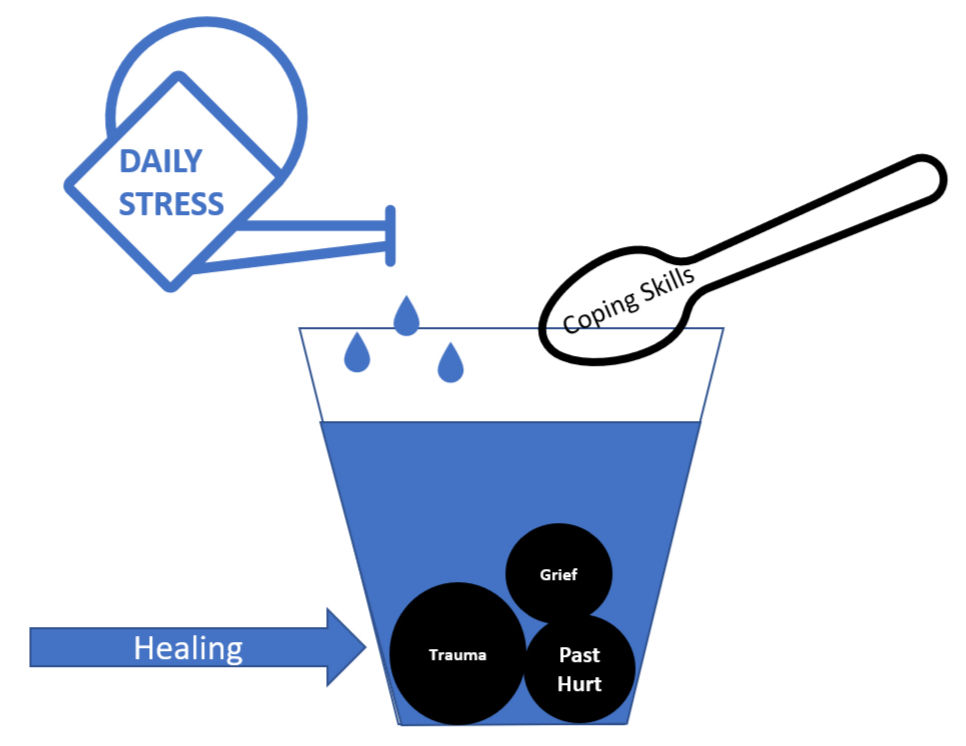
Last month, I introduced the emotion bucket. This bucket collects our daily life stress and, if it overflows, leads to negative emotions such as anger, depression or anxiety. Life stressors can add to daily stress, such as an auto accident, the loss of a job or the death of a loved one. In these cases, the emotion bucket overflows.

With coping skills and good self-care, the emotion bucket is more managable during the life stressor event, and can eventually return to previous levels.

Unfortunately, the bucket you see above is unrealistic. Each person's emotion bucket collects boulders as their life progresses. Unprocessed trauma, past hurts and grief are boulders in the bucket, taking away from available space before the day even begins. When daily stress is added to the bucket, it quickly fills. For some people, the boulders are so big that the bucket is always full and always overflowing with negative emotions, even without the added life stressors.

While coping skills help a person to deal with negative emotions, making the splash smaller, they do not heal boulders. A bucket with large boulders (or numerous smaller boulders) easily overflows.

Only the healing of past trauma, past hurts or grief can shrink the boulders in the bucket. This is often done through processing those events with appropriate therapy or in other healing relationships.
We'll dive more into these concepts in the coming months, but take some time to think about your common negative emotions and how they might be connected to trauma, past hurts or grief. Consider finding a safe person to talk to about these difficult topics.
Comments